
In this article
- What is AI Regulation in Europe?
- Overview of the EU AI Act
- Key Pillars of Compliance
- 1. AI Act Risk Classification
- 2. EU AI Act Obligations
- 3. EU AI Act Audit Requirements
- Challenges Businesses Face with AI Regulation
- How to Prepare for EU AI Act Compliance
- How AnnexOps Helps
- Conclusion
- Ready to automate your AI compliance?
- FAQ
- Author: Nitin Grover
The landscape of AI regulation in Europe is shifting rapidly. If you are a CTO, an AI founder, or a compliance manager, you’ve likely felt the pressure of the looming deadlines. The European Union has moved from mere discussion to enforcement, creating a framework that will dictate how artificial intelligence is developed and deployed globally.
Building a breakthrough AI product is hard enough; ensuring it doesn’t get sidelined by massive fines or regulatory blocks is an entirely different challenge. Whether you are a local startup in Berlin or a global scale-up entering the German market, understanding these rules is no longer optional—it is a core pillar of your product roadmap.
This guide breaks down the complexities of the EU AI Act into actionable insights, helping you move from regulatory anxiety to operational excellence.
What is AI Regulation in Europe?
At its core, AI regulation in Europe is designed to foster “trustworthy AI.” The EU’s approach is unique because it doesn’t just regulate the technology itself; it regulates the risks associated with specific use cases.
The primary goal is to ensure that AI systems used within the EU are safe, transparent, and under human oversight. For businesses, this means that “moving fast and breaking things” now comes with a significant legal caveat. If your AI impacts humans—whether through hiring algorithms, financial scoring, or healthcare diagnostics—the EU wants to ensure that impact is ethical and documented.
Overview of the EU AI Act
The EU AI Act is the world’s first comprehensive horizontal legal framework for AI. Much like GDPR transformed how we handle data, this Act is setting the global standard for AI governance.
It applies to any provider or user of an AI system within the EU market, regardless of where the company is headquartered. This means a Silicon Valley startup with users in Munich must comply just as strictly as a local German AI firm.
The Act is not a “one-size-fits-all” law. It uses a tiered approach, applying different levels of scrutiny based on the potential harm an AI system could cause.
Key Pillars of Compliance
To navigate this new territory, you need to understand the three structural pillars that will define your compliance journey.
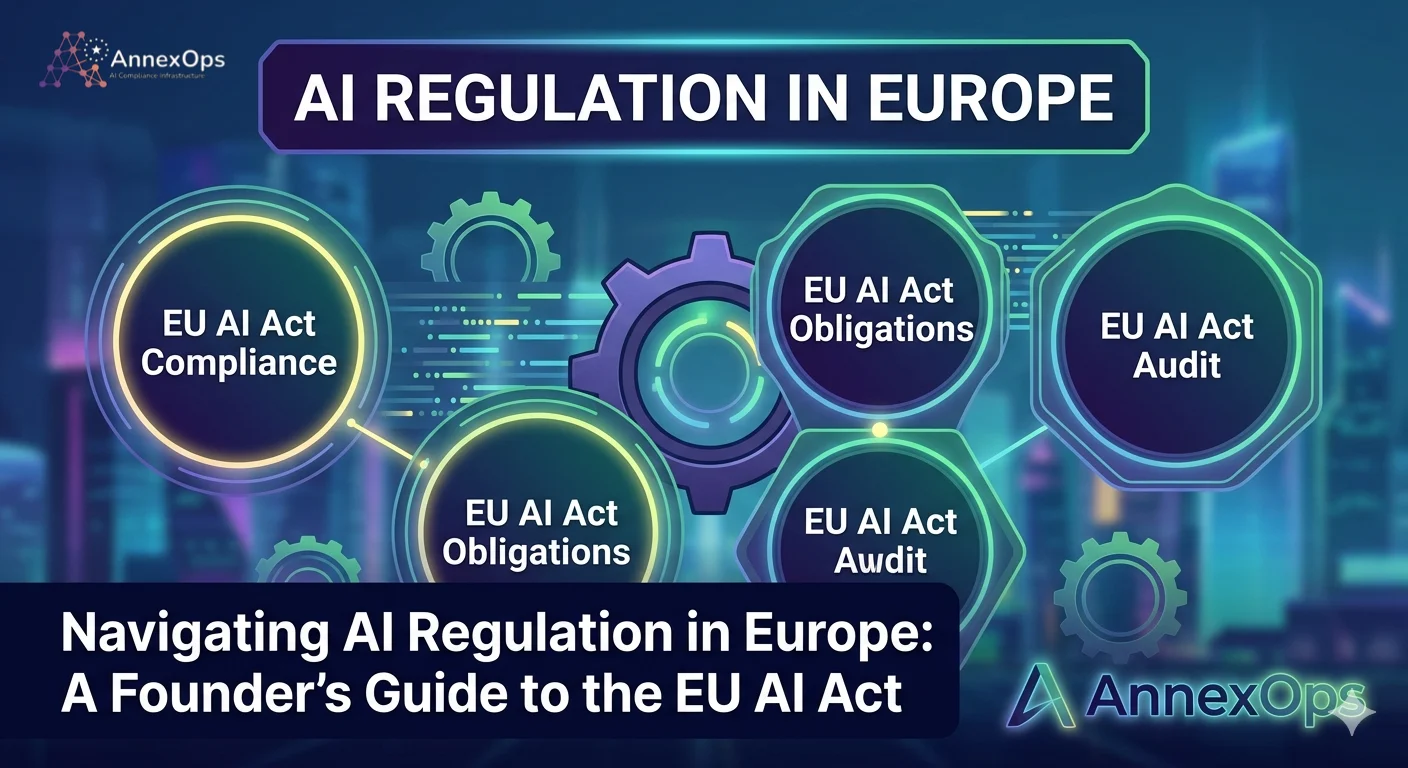
1. AI Act Risk Classification
Before writing a single line of code for your compliance report, you must determine where your product sits on the risk pyramid. This AI Act Risk Classification is the foundation of your obligations.
- Unacceptable Risk: Systems that deploy subliminal techniques, exploit vulnerabilities, or use social scoring are strictly prohibited.
- High-Risk: This is where most B2B SaaS products and industrial AI fall. Examples include AI in education, employment (CV screening), essential private services (credit scoring), and law enforcement.
- Limited Risk: Systems like chatbots or AI-generated content (deepfakes). These have minimal obligations, primarily focused on transparency—users must know they are interacting with AI.
- Minimal/No Risk: Applications like AI-enabled video games or spam filters. Most AI systems currently fall into this category and face no additional rules.
2. EU AI Act Obligations
Once you are identified as “High-Risk,” a rigorous set of EU AI Act Obligations kicks in. These aren’t just checkboxes; they require deep integration into your development lifecycle:
- Risk Management Systems: You must establish a continuous process to identify and mitigate risks throughout the AI’s lifecycle.
- Data Governance: Training, validation, and testing datasets must meet high quality standards to prevent bias.
- Technical Documentation: You need to maintain “living” documentation that proves compliance to authorities.
- Transparency and Human Oversight: AI systems must be designed so that humans can intervene or override decisions.
3. EU AI Act Audit Requirements
The “final exam” of compliance is the EU AI Act Audit. For high-risk systems, companies must undergo a conformity assessment before placing the product on the market.
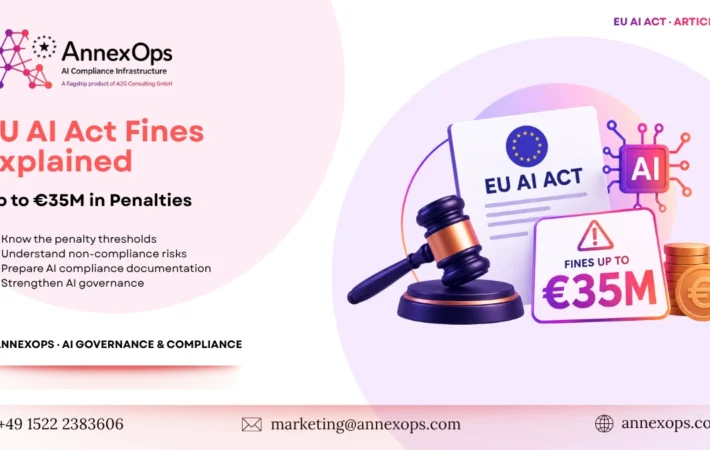
This involves a thorough review of your algorithms, data practices, and security measures. Post-market monitoring is also required, meaning you must continue to track the performance and safety of your AI once it’s live. Failure to pass these audits can result in fines of up to €35 million or 7% of global annual turnover.
Challenges Businesses Face with AI Regulation
For many AI startups and mid-sized firms, these regulations feel like a “tax on innovation.” The hurdles are real:
- Resource Drain: Compliance requires legal experts, data scientists, and project managers. Most startups would rather spend those resources on R&D.
- Complexity: Interpreting legal jargon into technical requirements is a massive friction point between legal teams and engineers.
- Market Entry Speed: The time required to complete a full EU AI Act Audit can delay product launches by months.
- Continuous Compliance: Regulation isn’t a “one-and-done” task. As your AI learns and evolves, so must your compliance documentation.
How to Prepare for EU AI Act Compliance
Preparation should start today, even if the full enforcement dates are still approaching. Here is a simplified roadmap:
- Inventory Your AI: Map out every AI model in your organization. What does it do? Who does it affect?
- Determine Your Category: Use the AI Act Risk Classification framework to see if you are High-Risk or Limited Risk.
- Bridge the Gap: Conduct a gap analysis. What documentation do you currently have, and what is missing?
- Implement Governance: Start building “Compliance by Design.” Integrate data logging and bias testing into your CI/CD pipelines.
How AnnexOps Helps
Navigating AI regulation in Europe shouldn’t mean pausing your growth. This is where AnnexOps steps in.
AnnexOps was built specifically for CTOs and founders who need to automate the “boring” parts of AI governance so they can focus on building. We bridge the gap between complex legal requirements and technical execution.
- Automated Risk Assessment: Our platform helps you instantly determine your AI Act Risk Classification with guided workflows.
- Centralized Governance Hub: Keep all your EU AI Act Obligations in one place—from data lineage tracking to human oversight logs.
- Audit-Ready Reports: Generate the documentation required for an EU AI Act Audit with the click of a button, reducing months of manual labor to hours.
- Real-time Monitoring: As your models drift or change, AnnexOps alerts you to potential compliance breaches before they become legal liabilities.
By integrating AnnexOps, European AI companies—especially those in high-stakes markets like Germany—can turn compliance from a hurdle into a competitive advantage. Showing your enterprise customers that your AI is pre-certified and fully governed builds a level of trust that “unregulated” competitors simply can’t match.
Conclusion
The era of the “Wild West” in AI is over. AI regulation in Europe is ushering in a new age of accountability. While the EU AI Act presents significant challenges, it also offers an opportunity to lead the market with ethical, transparent, and robust technology.
Don’t let compliance be the reason your AI stays in the sandbox. Proactive governance is the fastest route to market.
Ready to automate your AI compliance?
Don’t get buried in paperwork. Let AnnexOps handle the complexity of the EU AI Act compliance while you focus on scaling your vision.
Learn More
Learn how AnnexOps helps AI-driven companies prepare for the EU AI Act with clarity and confidence.
FAQ
1. What is AI regulation in Europe?
AI regulation in Europe refers to rules such as the EU AI Act that promote safe, transparent, and trustworthy AI systems.
2. What is AI Act risk classification?
AI Act risk classification categorizes AI systems based on their potential risk, determining the level of compliance obligations required.
3. Who must comply with the EU AI Act?
Any organization that develops, deploys, or provides AI systems in the EU market may be subject to the EU AI Act.
4. What are the main EU AI Act obligations for high-risk AI systems?
High-risk AI systems typically require risk management, technical documentation, human oversight, data governance, and ongoing monitoring.
5. How does AnnexOps help with EU AI Act compliance?
AnnexOps helps organizations automate risk classification, manage compliance workflows, maintain audit-ready documentation, and monitor AI governance activities.
Author: Nitin Grover
Nitin Grover is an AI compliance strategist and writer focused on EU AI Act compliance, AI governance, Annex IV documentation, AI risk management, and AI compliance operations for AI startups, SaaS companies, and enterprise AI teams across Europe.