AnnexOps Compliance
AnnexOps Compliance
No other compliance tool maps the intersection of GDPR and the EU AI Act for the same AI system in a single workflow. Stop managing two separate compliance processes for obligations that overlap by over 60%.
✓ Article 22 mapping
✓ DPIA triggers
✓ RoPA export
Overlap areas covered
Overlap engine capabilities
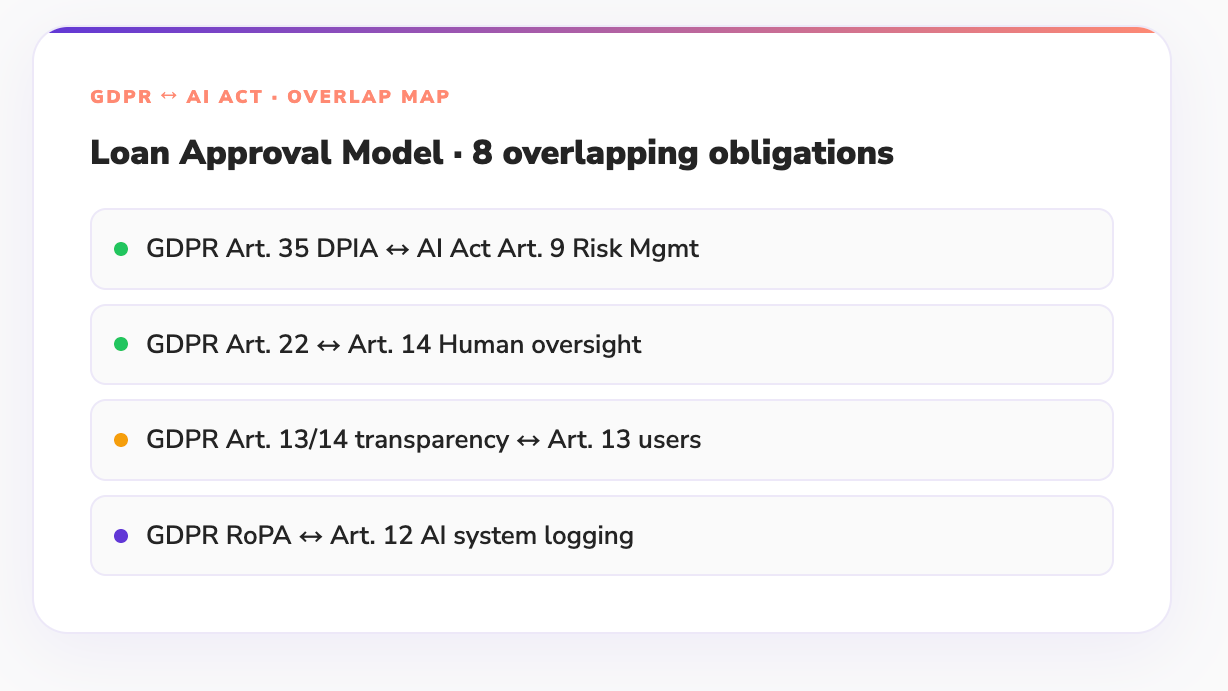
Maintain a register of all solely automated decision-making processes with safeguards, human review mechanisms, and data subject rights fulfilment — satisfying both GDPR Art. 22 and AI Act Art. 14.
One DPIA assessment satisfies both GDPR Art. 35 and EU AI Act Art. 9 risk management documentation requirements. No duplication, no gaps.
GDPR-compliant Records of Processing Activities automatically populated from your AI system registrations. Linked to technical documentation for DPO review.
Single set of user-facing disclosures covering GDPR information obligations (Arts. 13/14) and EU AI Act transparency requirements (Art. 13). One review, dual compliance.
Checks GDPR data minimisation and purpose limitation principles against EU AI Act Art. 10 data governance requirements. Flags conflicts before they become violations.
One-click export of the complete GDPR-AI Act overlap analysis for your DPO. Includes all mapping decisions, assessment outputs, and recommended actions.
Integrations
FAQs
GDPR provides a strong foundation in data protection, transparency, and accountability. These principles are relevant to the EU AI Act, especially in areas like data quality and user rights. However, GDPR does not address AI system-level requirements such as risk classification, continuous monitoring, and compliance obligations. This is where additional AI governance is required.
Yes, partially. Organizations can reuse components like data governance policies, consent management, and documentation practices. However, they must extend these frameworks to include AI-specific controls, such as system classification, monitoring, and audit evidence. AnnexOps helps organizations build on their existing GDPR investments instead of replacing them.
Bridging means extending existing compliance processes from data-level governance to AI system-level governance. AnnexOps connects GDPR-aligned practices with AI-specific requirements by adding layers such as:
GDPR governs how data is collected and processed, but it does not evaluate how AI systems make decisions or what impact those decisions have. The EU AI Act introduces requirements around risk, behavior, and outcomes, which go beyond data protection.
Map your overlap once. Save 40% of compliance effort. Stay aligned when either regulation updates.