AI Governance for HR AI Startups: How to Build Enterprise Trust
AI governance for HR AI startups is becoming an essential part of building enterprise-ready AI products. This blog explains how startups can establish practical AI governance practices by maintaining AI inventories, documenting key decisions, assigning ownership, organizing governance evidence, and reviewing AI systems throughout their lifecycle. It also discusses common governance challenges and demonstrates how AnnexOps helps HR AI startups centralize governance activities, improve documentation, strengthen operational readiness, and build greater confidence with enterprise customers.
Building an AI-powered recruitment platform is only the first step toward success. Whether your solution helps recruiters source candidates, screen resumes, rank applicants, or automate interview scheduling, enterprise customers increasingly want to understand not only what your AI can do but also how it is managed throughout its lifecycle.
As HR AI startups begin engaging with larger organizations, conversations often expand beyond product features. Procurement, security, legal, and risk teams may ask questions about documentation, governance processes, ownership, and how AI systems are monitored over time.
Preparing for these discussions doesn’t require a large compliance team. It begins with establishing practical AI governance practices that can grow alongside your product.
What Is AI Governance for HR AI Startups?
AI governance refers to the policies, processes, and operational practices that help an organization develop, deploy, monitor, and maintain AI systems responsibly.
AI governance for HR AI startups is less about creating lengthy policies and more about building repeatable processes that improve visibility and accountability as products evolve.
Depending on the organization, AI governance activities may include:
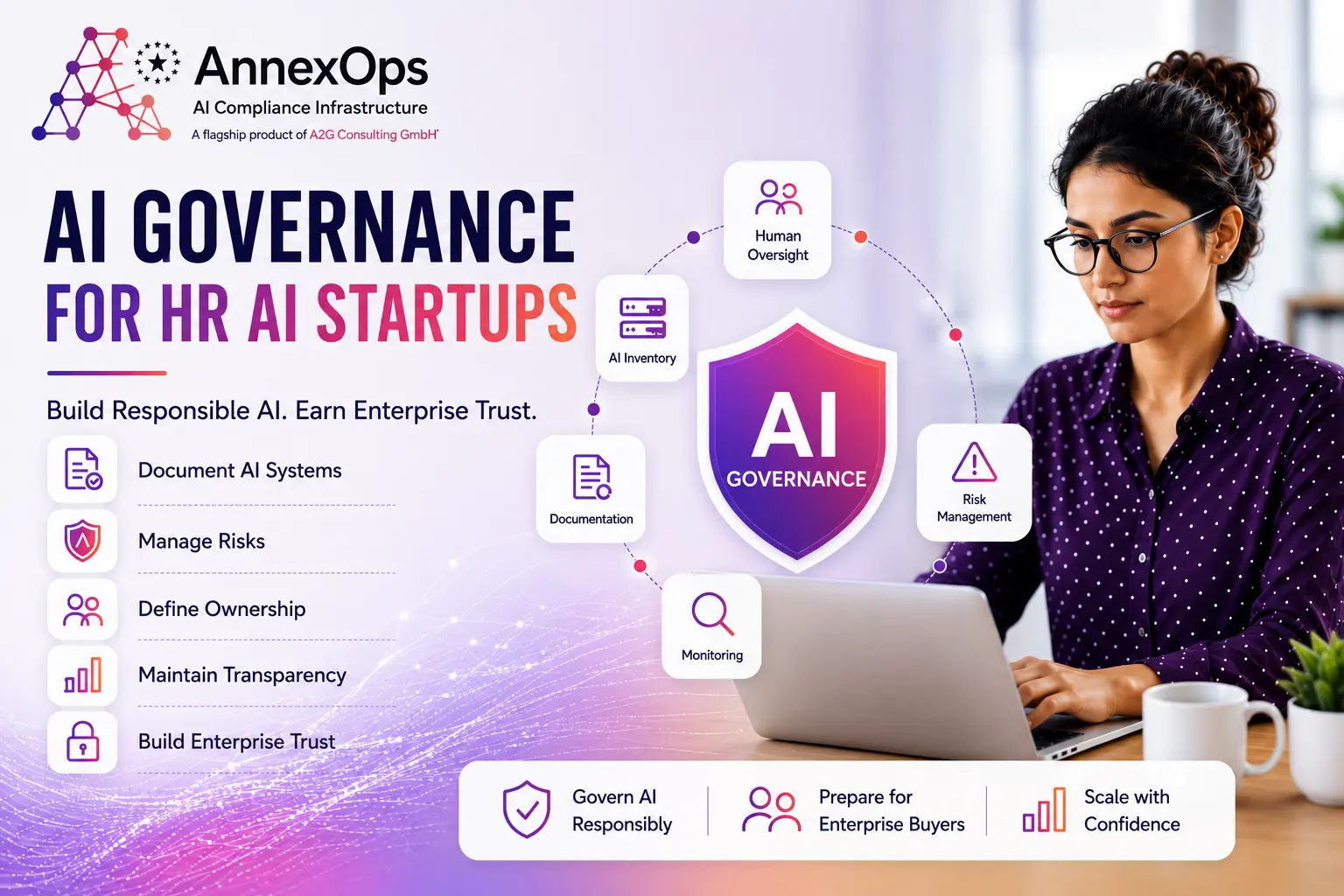
- Maintaining an inventory of AI systems
- Documenting models, datasets, and major design decisions
- Defining ownership and responsibilities
- Recording important product changes
- Organizing supporting documentation
- Monitoring AI systems throughout their lifecycle
Building these practices early helps teams stay organized as products, customers, and business requirements grow.
Why Matters AI Governance for HR AI Startups
AI applications used in recruitment and hiring can influence employment-related processes. Because of this, enterprise customers often seek greater transparency into how these systems are developed and managed.
During vendor evaluations, organizations may request information such as:
- How are AI systems documented?
- Who owns AI governance responsibilities?
- How are product updates recorded?
- What documentation is available for enterprise reviews?
- How are governance activities maintained over time?
Every enterprise procurement process is different. However, being able to respond with clear, organized information demonstrates operational maturity and helps create productive conversations.
Five Foundations of AI Governance for HR AI Startups
Effective AI governance doesn’t have to be complicated. Many successful organizations begin with a few practical foundations.
1. Maintain an AI Inventory
Create a centralized record of every AI system used within your organization. Include information such as system purpose, owners, deployment status, and key components.
A well-maintained inventory makes it easier to understand where AI is being used and supports future governance activities.
2. Document Important Decisions
Record key information throughout the product lifecycle rather than attempting to recreate it later.
Useful documentation may include:
- Product objectives
- Model updates
- Design decisions
- Data sources
- Version history
Small, consistent documentation efforts are usually easier to maintain than large documentation projects completed months later.
3. Define Ownership
AI governance works best when responsibilities are clearly assigned.
Product managers, engineering leaders, security teams, and leadership may all contribute to governance depending on the size of the organization.
Clearly defining ownership helps improve accountability and coordination.
4. Organize Governance Evidence
Enterprise customers often request documentation during procurement or vendor assessments.
Keeping governance records organized in one place can simplify internal collaboration and reduce time spent searching for information.
5. Review Governance Regularly
AI products evolve continuously.
Periodic reviews help ensure documentation remains current, governance processes continue to support business needs, and teams maintain visibility into AI systems.
Common Challenges HR AI Startups Face
Many startups prioritize product development during their early growth stages.
As enterprise opportunities increase, teams may discover that governance information is spread across multiple tools, documents, or individual team members.
Common challenges include:
- Documentation stored in different locations
- Limited visibility into AI systems
- Manual preparation for procurement questionnaires
- Difficulty tracking product changes
- Recreating historical information
Building governance gradually helps reduce these operational challenges over time.
Benefits of AI Governance for HR AI Startups
Establishing governance practices early can support both day-to-day operations and future growth.
Potential benefits include:
- Better visibility into AI systems
- More consistent documentation
- Improved collaboration across teams
- Easier preparation for enterprise assessments
- Reduced administrative effort as products evolve
- Greater confidence during customer discussions
Rather than being viewed solely as a compliance activity, AI governance can become part of building a well-managed AI business.
How AnnexOps Supports AI Governance
AnnexOps helps HR AI startups establish governance practices from a single platform.
Organizations can:
- Discover and inventory AI systems
- Centralize governance documentation
- Maintain governance workflows
- Organize evidence for enterprise assessments
- Monitor governance activities over time
- Support evolving AI governance and privacy expectations
Instead of relying on spreadsheets and disconnected documents, teams can manage governance activities through a structured and repeatable process.
Final Thoughts
Building an innovative HR AI product is an important achievement, but enterprise customers increasingly evaluate more than product capabilities.
Clear governance processes, organized documentation, and consistent operational practices help demonstrate that your organization is prepared to support AI systems as they grow.
AI governance for HR AI startups, doesn’t need to be overwhelming. Starting with practical, repeatable processes today can make future enterprise conversations more efficient and help your organization scale with confidence.
Build AI Governance with AnnexOps
Whether you’re preparing for enterprise customers or strengthening your internal AI governance processes, AnnexOps helps HR AI startups organize documentation, manage governance activities, and build operational readiness from day one.
Schedule a personalized demo to see how AnnexOps can simplify AI governance for your growing startup.
Author: Nitin Grover
Nitin Grover is an AI compliance strategist and writer focused on EU AI Act compliance, AI governance, Annex IV documentation, AI risk management, and AI compliance operations for AI startups, SaaS companies, and enterprise AI teams across Europe.
Frequently Asked Questions (FAQs)
1. What is AI governance for HR AI startups?
AI governance for HR AI startups refers to the policies, processes, and operational practices used to manage AI systems throughout their lifecycle. It includes activities such as documenting AI systems, assigning ownership, managing risks, maintaining records, and monitoring AI applications to support responsible development and enterprise readiness.
2. Why is important AI governance for HR AI startups?
As HR AI startups grow and engage with enterprise customers, buyers may request information about how AI systems are developed, documented, and managed. Establishing AI governance helps organizations maintain consistent processes, organize documentation, and prepare for enterprise procurement and vendor assessments.
3. When should an HR AI startup implement AI governance?
The best time to establish AI governance for HR AI startups is during the early stages of product development. Building governance practices alongside product development is often easier than recreating documentation and processes later as customer expectations and business operations grow.
4. What are the key components of AI governance?
An effective AI governance program commonly includes:
- AI system inventory
- Documentation management
- Defined ownership and responsibilities
- AI risk management
- Human oversight
- Monitoring and review processes
- Evidence and record management
The exact governance framework will vary depending on the organization’s size, industry, and AI use cases.
5. What challenges do HR AI startups face when implementing AI governance?
Common challenges include:
- Maintaining documentation across multiple teams
- Tracking AI system changes
- Defining governance responsibilities
- Preparing documentation for enterprise customers
- Organizing governance evidence as products evolve
Introducing governance gradually can help reduce these operational challenges over time.
6. How does AI governance support enterprise readiness?
Enterprise customers often evaluate both product capabilities and organizational processes. Well-organized AI governance can help startups respond more efficiently to customer questionnaires, maintain consistent documentation, and demonstrate structured operational practices during procurement discussions.
7. Is AI governance only about regulatory compliance?
No. While governance can help organizations prepare for evolving regulatory expectations, it also supports internal operations. AI governance for HR AI startups improves documentation, accountability, collaboration, and visibility into AI systems, making it valuable beyond compliance initiatives.
8. What is the difference between AI governance and AI risk management?
AI governance for HR AI startups is the broader framework that defines how AI systems are managed throughout their lifecycle. AI risk management is one part of that framework and focuses specifically on identifying, assessing, monitoring, and addressing risks associated with AI systems.
9. How can AnnexOps help in AI governance for HR AI startups?
AnnexOps provides a centralized platform that helps organize AI governance for HR AI startups activities. Teams can discover AI systems, maintain documentation, manage governance workflows, organize evidence, and support enterprise readiness through structured governance processes.
10. How can HR AI startups begin building AI governance?
Start with practical steps such as:
- Creating an inventory of AI systems
- Documenting important product decisions
- Assigning governance responsibilities
- Organizing governance documentation
- Reviewing governance processes regularly
These foundational activities can help build a scalable governance program as the organization grows.
Author: Nitin Grover
Nitin Grover is an AI compliance strategist and writer focused on EU AI Act compliance, AI governance, Annex IV documentation, AI risk management, and AI compliance operations for AI startups, SaaS companies, and enterprise AI teams across Europe.




Nitin Grover
Nitin Grover is a Compliance Manager at AnnexOps, specializing in EU AI Act compliance, AI governance, and risk management. He helps organizations build audit-ready and compliant AI systems across Europe.